
WHAT I READ IN 2025
Okay, everyone, it’s time to start winding down another year! Today, we’re starting with books. I really admire the people who set out to read one book a week. I never set a goal for myself on how many books I want to read—I just read the ones that speak to me. I genuinely believe certain books find you at the moment you’re ready to receive what’s inside. Still, as I wrote this list over the weekend, I felt a little disappointed that I hadn’t read more in 2025. I averaged about one book a month, though, which isn’t bad. I also didn’t include any astrology books because, while I read them quite often, they’re more like reference books. I read a few pages and put it down. If you’re curious about my astrology reading list, you can find it here. Anyway, I think I’m capable of reading much more (my tech addiction holds me back if I’m being honest), so maybe that will be my goal for 2026—along with sprinkling some fiction in.
From the new dating bible to a sharp unpacking of heterosexuality and a book that will help you deal with difficult parents during the holidays, here’s what I read this year.
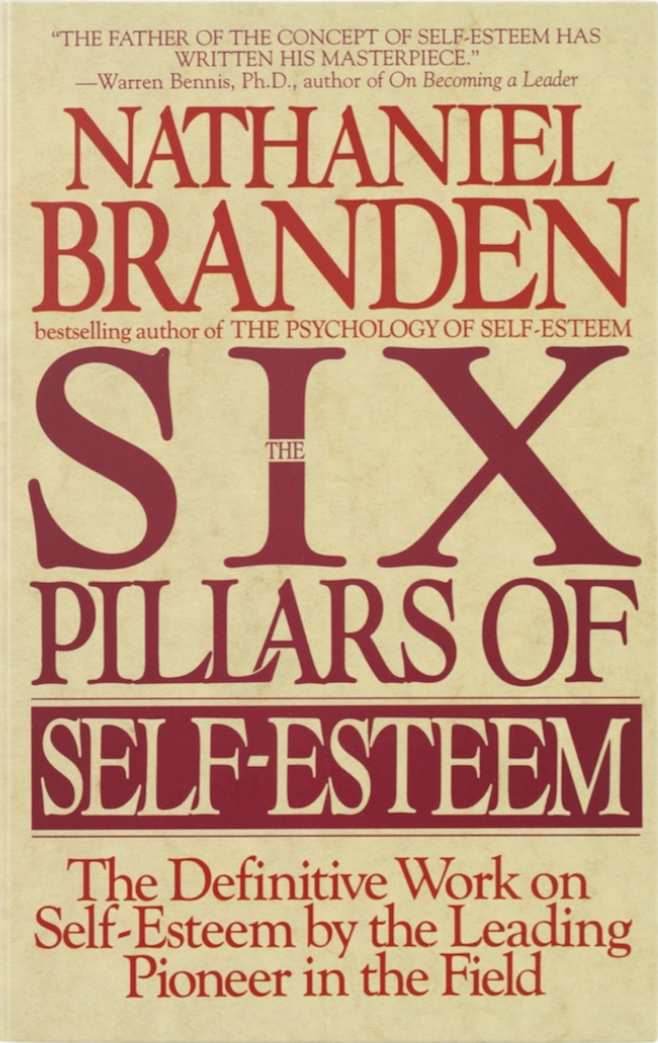
“When we have unconflicted self-esteem, joy is our motor, not fear. It is happiness that we wish to experience, not suffering that we wish to avoid. Our purpose is self-expression, not self-avoidance or self-justification. Our motive is not to “prove” our worth but to live our possibilities.”
I was at home reading this book as the clock struck midnight on January 1, 2025. I had planned to go to bed early, but I stayed up past midnight because I couldn’t put it down. We’re just expected to learn and build self-esteem and self-worth as byproducts of how we move through the world—but depending on your family, the environment you grow up in, your education, the media you consume, it’s very easy for them to become compromised. Personally, I’ve always felt I had good self-esteem (self-worth had been more of a struggle in the past), but over the years, I’ve grown really curious about the conditions that encourage or harm these things.
If you struggle with self-esteem or self-worth, it doesn’t have to be a life sentence—you can work on it. Through years of research, Nathaniel Branden has developed six pillars to do just that. They’re all action-based and come with questions and prompts, from practicing living consciously to self-acceptance, self-responsibility, self-assertion, living purposefully, and maintaining integrity. Branden ensures that it is our responsibility alone to change our lives and to create our own happiness—no one is coming to save us. This book should really be taught in schools, and it also includes a section for parents, educators, and those responsible for helping shape others' self-esteem. I also read another book by the author, The Psychology of Romantic Love, that I enjoyed too.
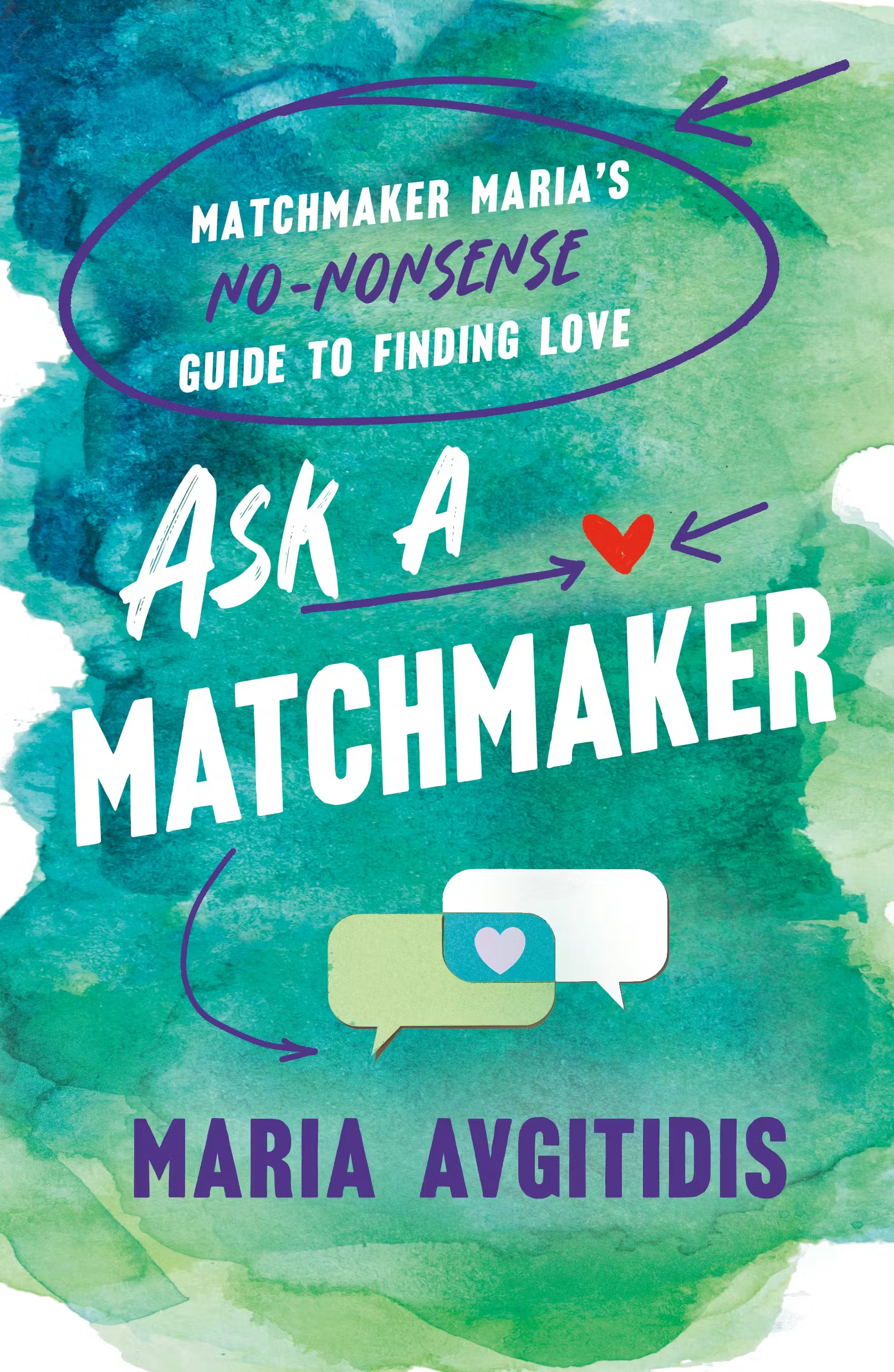
“As the nuclear family became more important, the role of the family evolved. The goal of raising children isn't just to exponentially increase the amount of love and connection in the household or to add supportive new members to the wider social fabric. Instead, parents are essentially told their job is to effectively launch the nuclear families of tomorrow and to keep our individualist society spinning. Parents are encouraged to rear independently minded kids who will be self-supporting individuals by early adulthood. Not only should they be going to school and/or getting a "good" job, but also in their own homes and settings themselves up for financial success before their prefrontal cortex is finished settling. During this time, they should also be searching for a life partner to build their own nuclear family with. If someone hasn't "left the nest" by twenty-five, everyone involved is seen as a failure. So a lot of dating-age people are left feeling like lonely cogs in the machine of life, instead of valued humans who are allowed to ask for connection and empathy.”
Okay, I never finished Calling In the One, but I did read The Rules, and I truly think Maria Avgitidis’ book is going to be our generation’s dating bible. She pours nearly 20 years of experience as a fourth-generation matchmaker into a straightforward guide to fixing your picker, getting honest about what you want in a partner, and understanding your patterns. Along the way, she weaves in Greek mythology, stories from her own dating journey to meeting her husband, and real client anecdotes. And this book isn’t just for people actively searching for love—there’s valuable guidance for anyone who’s dating or even married. Maria’s signature 12-date rule has already helped countless people build healthy relationships that led to marriage, so I have no doubt this book will do the same.
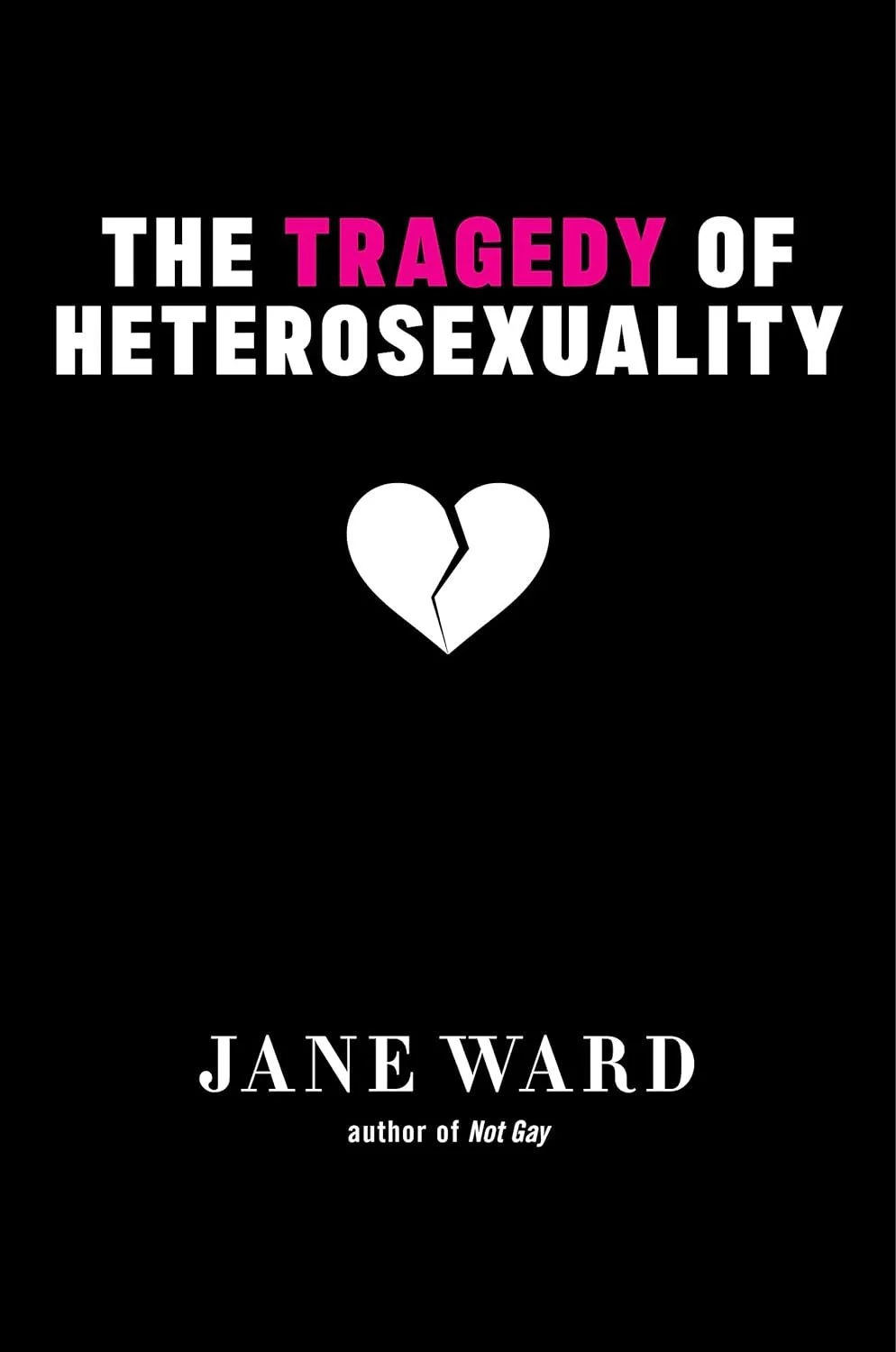
“First, queer feminists have argued that straight life is characterized by the inescapable influence of sexism and toxic masculinity, both of which are either praised or passively tolerated in straight spaces. Second, queer observers of straight life have pointed to straight women’s endless and ineffective efforts to repair straight men and the pain of witnessing straight women’s optimism and disappointment.”
I first saw Chantay Joseph—writer of the viral Vogue story “Is Having a Boyfriend Embarrassing?”—post about this book a few weeks before her article debuted. This is definitely a book for those of us asking, “Where do we go from here?” as we look at the bleak landscape of modern dating. The chapter that I found the most fascinating examined how men have historically been socialized to hate women—we see evidence of this constantly.
Think of the man who catcalls you on the street and, when ignored, instantly turns around and insults you. The author calls this the “misogyny paradox”: falling in love with women was once considered “unmanly,” yet the modern idea of heterosexuality requires these same men to express love and affection toward the very group they’d spent centuries dominating and dehumanizing. Bleak!
The book also dives into how heterosexual relationships functioned as a tool of white supremacy during the Jim Crow era, and how it was later marketed to African Americans as a pathway into “normal” American society. The book is highly critical of the self-help industry, which I understand but don’t fully agree with. Yes, many self-help books and gurus target women and frame personal growth as a way to “fix” themselves to find love. But in reality, anyone interested in self-awareness, understanding their patterns, and improving how they relate to others ends up strengthening all their relationships—not just the romantic ones.
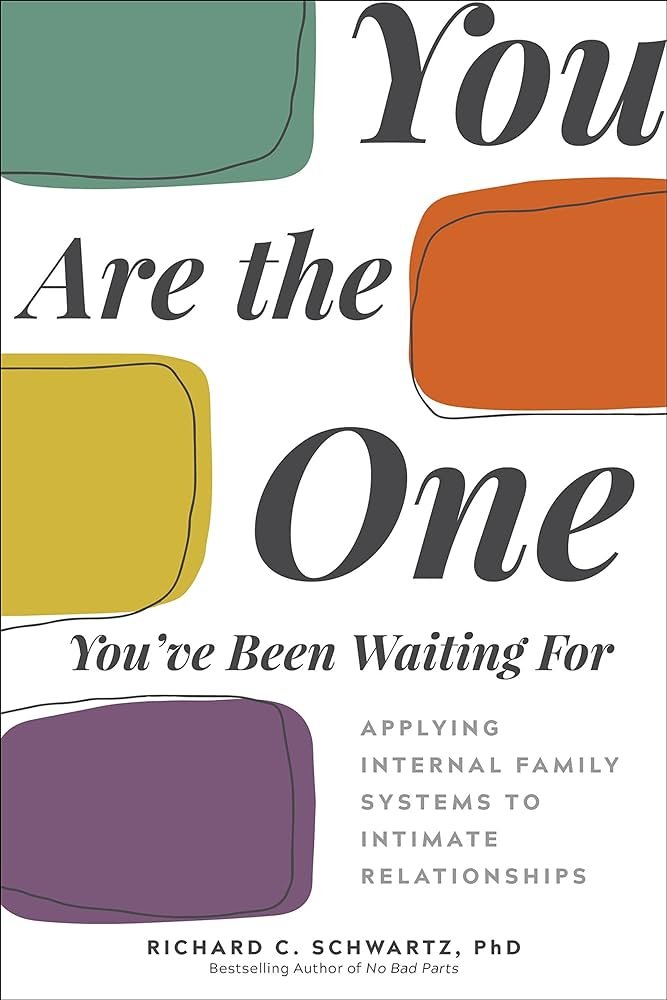
“You can become your own healer—the special person your vulnerable parts have been waiting for. When that happens, your partner will be released from the redeemer trap and its accompanying projects, and true intimacy will be possible.
This is my second-favorite book I’ve read this year—and probably the most important one for anyone who’s in, or trying to find, a romantic relationship. Written by the founder of Internal Family Systems therapy, Dr. Richard Schwartz reveals how many of us—whether we admit it or not—are looking for someone to rescue and take care of the hurt inner child within us, and to finally give us the love we never received. On top of that, we often attract the very people who will trigger that inner child again and again. This can even show up in our friendships.
Dr. Schwartz breaks down exactly why this happens and how to become the primary caretaker of your own inner child, so you’re not expecting a partner (who likely has their own wounded inner child) to take care of yours. The partner becomes the secondary caretaker. I guarantee this book will change the way you see your needs—and the way you try to get them met.

“What man condemns in others, he attracts to himself.”
I can’t remember where I first heard about this book or whether someone recommended it to me, but it’s often compared to The Secret. I don’t agree with everything in it, but I do think there’s real value in making the case for positive thinking—visualizing what you want and believing that it’s actually possible. That’s never a bad thing. That said, I genuinely believe everyone manifests differently, which is why I always encourage people to learn their Human Design. Still, having belief in yourself alone can make a world of difference.
Trust is a “confident relationship with the unknown.”
That quote now lives rent-free in my mind. This book was recommended to me by astrologer Colin Bedell during a reading earlier this year. I’ve never considered myself someone with trust issues—if anything, I can be a little too trusting, thanks to my Taurus ascendant (Taurus energy is nothing if not loyal). But with Scorpio ruling my 7th house of committed partnership, it also takes a lot for me to fully trust someone. Botsman’s book explores how
to build trust in friendships, romantic relationships, and at work. She argues that trust isn’t just a feeling—it’s a belief: a belief about how someone will behave or how a situation will unfold. I was genuinely surprised when she addressed the idea of “trust your gut” and essentially said that your gut isn’t always reliable. So, it shouldn’t be a decision-maker, but it can be a decision-driver—if paired with other information. She also breaks down how trust often hinges on two things: capability and character.
“Limerence can live a long life sustained by crumbs. Indeed, overfeeding is perhaps the best way to end it. It bears a definite resemblance to the condition of the laboratory rats and pigeons who continue to press the bar or peck at the disk even when the probability of food reward is gradually diminished, so that on the average only one in hundreds or even thousands (for pigeons who were very persistent and rapid peckers) of “responses” actually pays off. When the animal is presented with an uncertain relationship between its actions and the behavior of the food-delivery mechanism, quite remarkable results are obtained. Even for laboratory animals, the key elements seem to be doubt and hope. Ordinary gambling resembles this laboratory behavior in its persistence even when chances of winning are slight. Perhaps for both limerent persons and habitual gamblers, the size of the possible prize is also important. Both gamblers and limerents find reason to hope in wild dreams.”
This book will likely only resonate with people who’ve experienced limerence—an intense, all-consuming infatuation, often with someone who doesn’t return your feelings, or at least not with the same intensity. Limerence has become a buzzy topic in pop psychology over the past year, but I first learned about it in therapy about six years ago, when my then-therapist suggested that a situationship I’d been in had limerent qualities. The more I explored the concept, the more I realized it was limerence—and, thankfully, it was my first and only experience with it because it was quite torturous. Dorothy Tennov, who coined the term, conducted the original research for this book in 1979. Her work offers a fascinating look at the psychological conditions that make limerence possible, especially given that it’s not something we consciously choose.
I read a few books about it back then, but this book, published in 1979, is by the woman who actually coined the term limerence and conducted the first research on it.
“If you remain always on the right path, you will not be celebrated by existence. You will be a simpleton; you will not be enriched by life. You will have no salt in you, you may be nutritious but no spices, you will be very simple, good, but your goodness will not have complex harmony in it. You will be a straight line, with no curves and no corners. Those curves and corners give a beauty, they make life more mysterious, they give depth. You will be shallow in your saintliness, and you will not have any depth in you. That’s why tantra says everything is beautiful. Even sin is beautiful, because sin gives depth to your saintliness. Even going astray is beautiful, because coming back becomes more enriched. This world is needed for you to move into it deeply so that you forget yourself completely and then… a coming back.”
I know Osho is a controversial figure (even though I’ve never watched the documentary), but I genuinely enjoy reading his work. Tantra, overall, is deeply misunderstood—it’s not just about sex, and in this book, sex is barely mentioned. The focus is actually on enlightenment. One of my favorite parts comes at the beginning, where Osho writes that we shouldn't be “seeking” the truth because we don’t know its address. If we search too hard, we miss it—the effort itself becomes a barrier. The truth will find us when we’re ready. Much of what Osho explores here—detachment, being both a witness and a participant in your life—reminds me of meditation. The goal of meditation isn’t to have “no thoughts,” but to let thoughts arise without attaching meaning to them, letting them pass like clouds floating by in the sky rather than over-identifying with any one thing. In many ways, this is exactly how Osho believes life is meant to be experienced.
“A clue that all is not well comes when I ask them how they feel and they honestly don’t know. In contrast, they almost never have a problem telling me what they think about things. Not knowing how or what we feel can be a sign of disassociation from our body and lived experiences, and can be a sign of trauma. By staying in this pattern, we are unconsciously denying ourselves the full spectrum of our experiences and emotions by suppressing parts of ourselves that need our attention. Then, the pattern of tolerating mistreatment can get repeated in our careers, relationships, and friendships—and we have no idea why this trouble keeps following us around.”
When I first listened to Terri’s podcast about her book, I thought, Wow…this is my mother. It gave me so much insight into how and why she constantly takes on other people’s problems—mine, my siblings’, my dad’s, and honestly, anyone she comes across—even when no one has asked for her help. It’s exhausting to witness, and I can only imagine how exhausting it must be to live that way. But my mom has also worked as a nurse and caretaker for most of her life, so much of this behavior is compulsive and easily disguised as simply being “helpful.” In this book, Terri breaks down the root causes of overfunctioning. It also pushed me to confront my own tendency to jump in with advice, and how—even if it comes from a good place—trying to help our friends too quickly can actually rob them of the agency to work through their own issues. It was an honor to have her on FWD JOY earlier this year.
“Research has shown that historical traumas rooted in racial discrimination and the aftermath of war (like the Holocaust, the Civil War, slavery, the forced relocation of Native Americans, Jim Crow, and the financial impact of World War II on the United Kingdom) can have silent, negative health impacts on the descendants of those who experienced them.5 In short, our ancestors pass along trauma because trauma impacts our DNA; this is called intergenerational trauma. Passed-down trauma can have an impact not just in the next generation but also in later generations. Intergenerational trauma can impact you if your parents or grandparents were survivors of genocide or were refugees.”
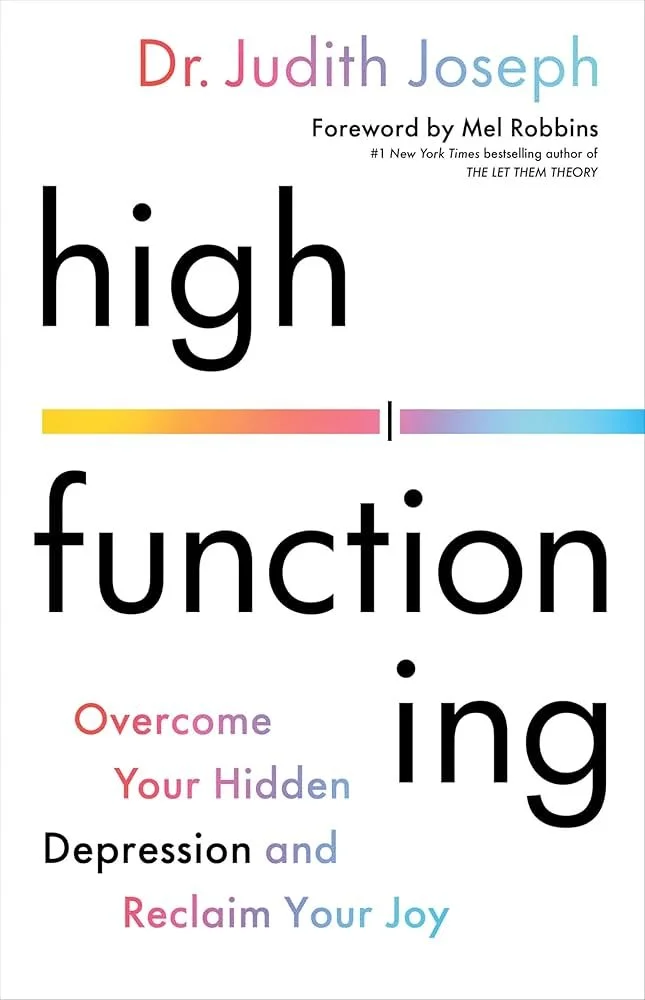
Dr. Judith Joseph is another brilliant psychologist I’ve had the privilege of interviewing for my newsletter, and she also joined me as the guest for my FWD JOY event during Mental Health Awareness Month in May. She coined the term “high-functioning depression” after noticing a pattern in her research lab: people who were deeply struggling but still exceedingly functional. Typically, a diagnosis of clinical depression requires a noticeable loss of functioning or significant distress. But for many, the red flag wasn’t slowing down—it was a profound loss of joy, or anhedonia, the inability to feel pleasure. In her book, she outlines how to recognize whether you might be dealing with high-functioning depression and introduces a five-point framework she calls the Five V’s for reclaiming joy: validation, venting, values, vitals, and vision. It’s a gentle, almost gamified approach to rediscovering small moments of joy in everyday life—rather than striving for the often-overwhelming, out-of-reach idea of “being happy.”
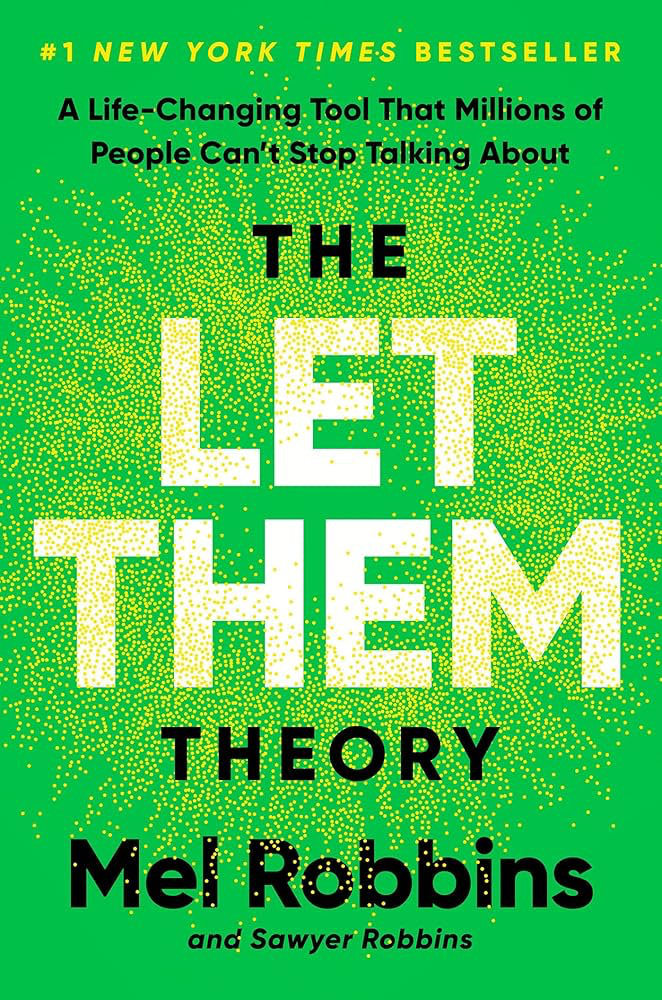
“My point is simple: Adults will have negative opinions about you and everything you do. Let Them judge. Let Them react. Let Them doubt you. Let Them question the decisions you are making. Let Them be wrong about you. Let Them roll their eyes when you start posting videos online or you want to rewrite the manuscript for the 12th time. Instead of wasting your time worrying about them, start living your life in a way that makes you proud of yourself. Let Me do what I want to do with my one wild and precious life.”
I made a video about this book earlier this year, when a few people asked me for my thoughts on it. My feelings still stand. I don’t want to shit on a book that has helped people find awareness around an issue they’re dealing with—but awareness is only really half of it. I don’t feel that
Mel is offering real solutions to deal with people-pleasing and codependency issues. It reminds me of when I first read Attached by Amir Levine. It opened up this whole new understanding and language to explain why I often felt so crazy and anxious while dating. However, that newfound knowledge still didn’t solve my problems because there was a deeper issue within my nervous system and my ability to meet my own needs—and it required a lot more work on my part to address it. It literally took me years. So, I don’t think saying “let them,” is going to address what happens for people when they get triggered or when they’re resentful because of people-pleasing and codependency.
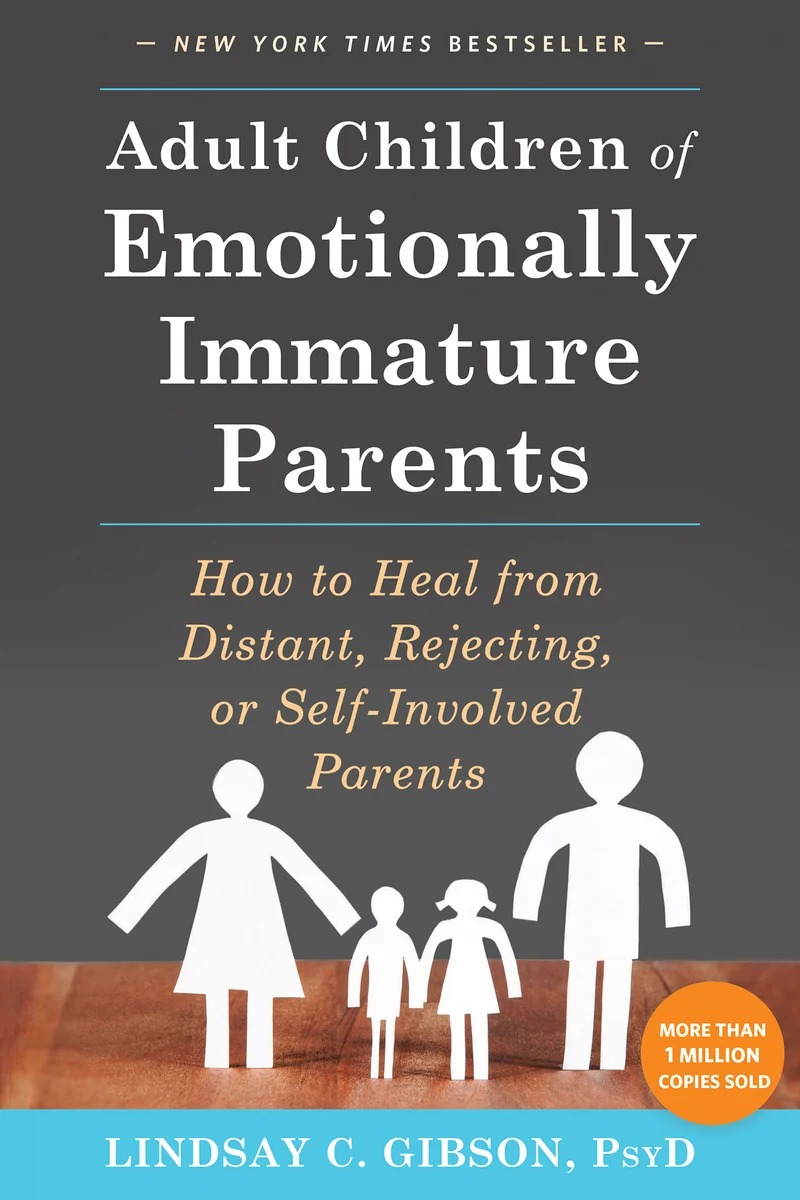
“Children stay in alignment with their true self if the important adults in their lives support doing so. However, when they’re criticized or shamed, they learn to feel embarrassed by their true desires. By pretending to be what their parents want, children think they’ve found the way to win their parents’ love. They silence their true selves and instead follow the guidance of their role-selves and fantasies. In the process, they lose touch with both their inner and outer reality.”
I feel like most people know this book. I actually read this years ago, but my therapist has referenced it so many times in my sessions lately that I figured it was time to refresh my
memory. So I just started re-reading it last week. It’s essentially the bible for anyone who grew up with problematic parents. If you felt like your needs weren’t met or were regularly dismissed, this book is for you. It clearly lays out the different ways emotionally unavailable or immature parents behave, and how to heal from the hurt, confusion, and disappointment they create. This is an absolute must-read if you’re navigating the holidays with complicated family dynamics.

Ok, I did attempt to read ONE fiction book this year, everyone clap for me!
I happened to pick up The Bell Jar by Sylvia Plath before my last summer holiday to Portugal in August. However, I only made it about halfway through—I’m going to finish it during the holiday break.